
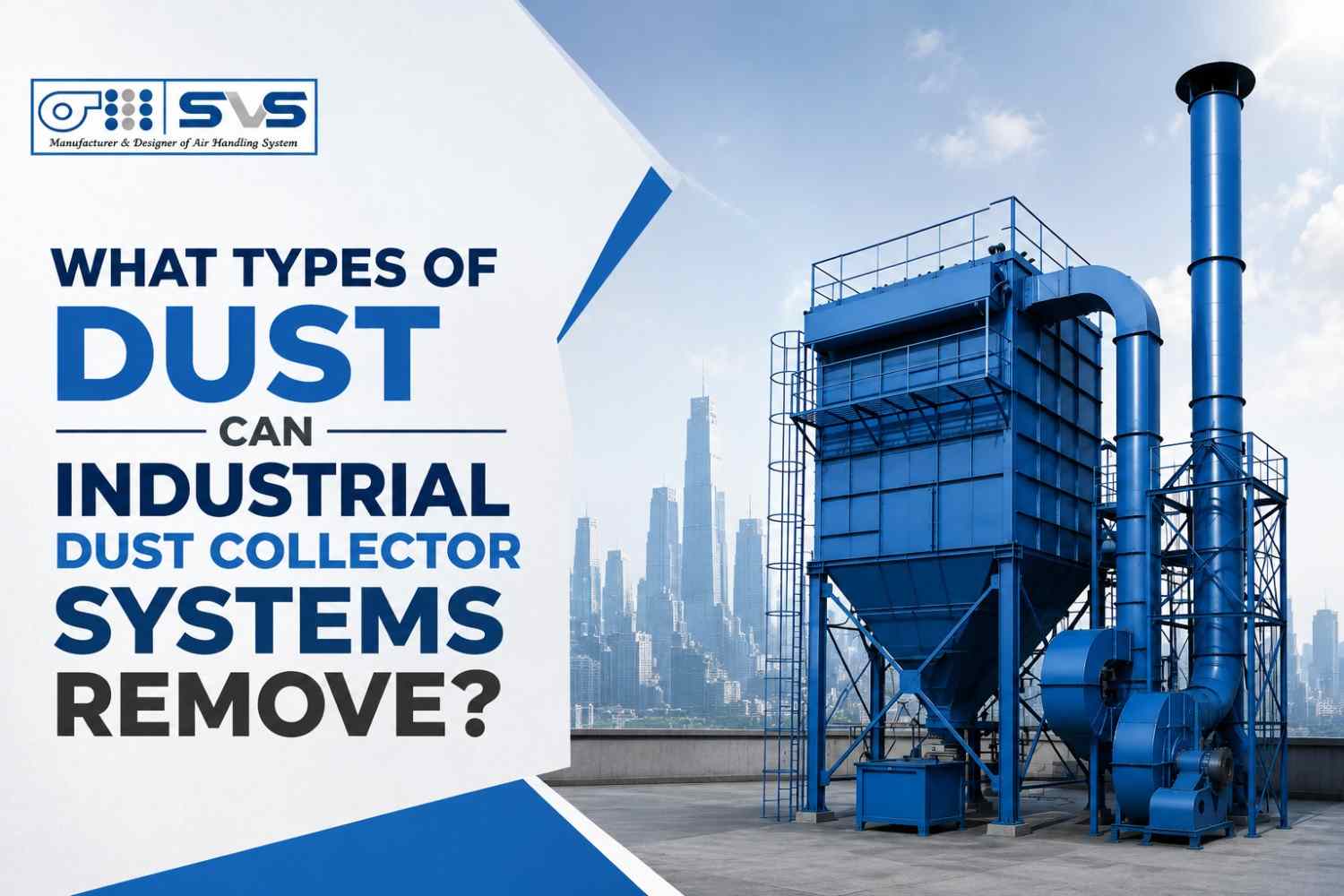
What Types Of Dust Can Industrial Dust Collector Systems Remove?
Short Highlights
- Different dust types require different collection and filtration methods.
- Fine particles need suitable filters and properly designed airflow.
- Metal dust may require special fire safety considerations.
- Food and grain dust can create combustible dust hazards.
- Moisture and sticky particles can affect filter performance.
- Choose collectors based on material, process, and airflow needs.
Do you want to know what types of dust industrial dust collector systems can remove? Different industries produce different dust particles during cutting, grinding, mixing, crushing, and other processes. The right dust collector depends on particle size, material type, dust load, and workplace conditions.
These systems by dust collector systems manufacturers capture airborne particles before they spread through a facility. They can handle materials such as wood dust, metal dust, cement particles, chemical powder, and mineral dust. However, no single collector works equally well for every dust type.
What Types of Dust These Systems Remove?
Industrial dust collectors can remove a wide range of dry airborne particles. The actual removal capacity depends on the collector design, filter type, airflow, and properties of the dust.
Common dust types include:
- Wood dust from cutting and sanding
- Metal dust from grinding and polishing
- Cement and concrete dust from construction processes
- Mineral dust from crushing and processing
- Plastic dust from manufacturing operations
- Chemical powder from industrial production
- Food dust from processing and packaging
- Pharmaceutical powder from medicine production
- Textile dust from spinning and fabric processes
- Grain dust from agricultural processing
Can Dust Collectors Remove Fine Dust Particles?
Yes, properly designed systems can capture fine dust particles. However, the filter and collector design must match the particle size.
Cartridge collectors and baghouse dust collectors can handle fine particles when designed correctly. Filter selection depends on factors such as particle size, temperature, moisture, and chemical properties.
Can Industrial Dust Collectors Remove Wood Dust?
Yes, they can remove wood dust from woodworking operations. Sawmills, furniture plants, cabinet workshops, and wood processing facilities commonly generate this type of dust.
Wood dust can come from:
- Cutting
- Sawing
- Sanding
- Drilling
- Routing
- Grinding
Can Dust Collectors Handle Metal Dust?
Yes, they can capture metal dust from processes such as grinding, cutting, buffing, and polishing.
Metal dust can vary greatly based on the material and process. Steel, aluminum, brass, and other metals can produce different particle characteristics.
Grinding operations often create fine particles. These particles can travel through the air and enter nearby work areas without proper extraction.
Metalworking facilities should select filtration equipment based on the metal being processed.
Can Dust Collectors Remove Cement and Concrete Dust?
Yes, suitable ones can capture cement and concrete dust. These materials often produce fine mineral particles during mixing, drilling, cutting, crushing, and grinding.
Construction and manufacturing operations can create dust during:
- Concrete cutting
- Cement handling
- Stone grinding
- Material crushing
- Dry mixing
- Surface preparation
Can Industrial Dust Collectors Remove Chemical and Powder Dust?
Yes, they can capture certain chemical powders and dry process particles. The correct system depends heavily on the chemical’s properties.
Manufacturing facilities may produce powder during mixing, weighing, filling, grinding, or packaging. Pharmaceutical and chemical plants often need carefully selected filtration equipment.
Before choosing a collector, operators should consider:
- Chemical composition
- Particle size
- Moisture content
- Temperature
- Corrosive properties
- Combustibility
- Required filtration level
Can Dust Collectors Remove Food and Grain Dust?
Yes, they can capture food and grain dust from processing operations. Flour, sugar, starch, grain, and similar dry materials can become airborne during handling.
Food processing plants can generate dust during:
- Milling
- Grinding
- Mixing
- Conveying
- Weighing
- Packaging
Can Dust Collectors Remove Plastic and Rubber Dust?
Yes, they can capture plastic and rubber dust from manufacturing processes. Cutting, grinding, trimming, and finishing can release fine particles.
Plastic dust can differ significantly based on the material being processed. Some plastics can produce sticky particles that affect filter performance.
Rubber processing can also produce fine dust and particles. The collector should account for particle characteristics and the operating temperature.
Can Industrial Dust Collectors Remove Textile Dust?
Yes, they can remove textile fibers, lint, and other airborne particles. Textile plants can generate dust during spinning, weaving, cutting, and fabric processing.
Textile dust may contain short fibers and lightweight particles. These materials can remain airborne and spread across production areas.
The collection system should provide suitable airflow across the production equipment. Filter selection should also match the fiber type and dust load.
Regular maintenance matters because collected fibers can build up inside ducts and filters.
Does Every Dust Collector Remove the Same Types of Dust?
No. Different dust collectors suit different materials and processes.
A cartridge dust collector often works well for fine dry particles. Baghouse collectors can handle large industrial dust loads and continuous operations.
The choice depends on several factors:
- Type of dust
- Particle size
- Dust concentration
- Air volume
- Operating temperature
- Moisture level
- Material properties
- Required filtration level
How Do You Choose the Right Dust Collector for Your Industry?
Start by identifying the dust produced by your process. Then assess its physical and chemical properties.
You should also measure the amount of air that needs extraction. This helps determine the required airflow and collector capacity.
Consider these steps:
- Identify the material creating the dust.
- Determine the approximate particle size.
- Check the dust concentration.
- Assess moisture and temperature.
- Check for fire or explosion risks.
- Select suitable filter media.
- Calculate the required airflow.
- Plan regular filter and system maintenance.
Why Does Dust Type Matter for Collector Performance?
Dust type directly affects how a collector should operate. Particle size, shape, weight, moisture, and chemical properties all influence filtration.
Heavy particles may settle quickly. Fine particles can remain airborne and require suitable filter media.
Sticky dust can block filters faster. Moist dust can also create problems inside certain collection systems.
Summary
These collector systems by cyclone dust collector manufacturers can remove wood, metal, cement, mineral, plastic, chemical, food, grain, textile, and other dry particles. The right system depends on dust size, material properties, airflow, temperature, and safety risks. Proper collector selection captures dust effectively and supports cleaner industrial work areas.
FAQs
Not always. Different dust types have different particle sizes and properties. The right collector depends on the material, dust load, airflow, moisture, and required filtration level.
Yes, suitable systems can capture fine dust particles. Cartridge and baghouse collectors can work well for fine particles when you select the right filter and airflow.
Yes, suitable systems can capture fine dust particles. Cartridge and baghouse collectors can work well for fine particles when you select the right filter and airflow.
Yes. Suitable systems can collect both wood dust and cement dust. However, these materials have different properties, so the filter and collector design should match the specific application.
Start by identifying the dust your process produces. Then check its particle size, concentration, moisture, temperature, and safety risks. You should also consider the required airflow and filter type.