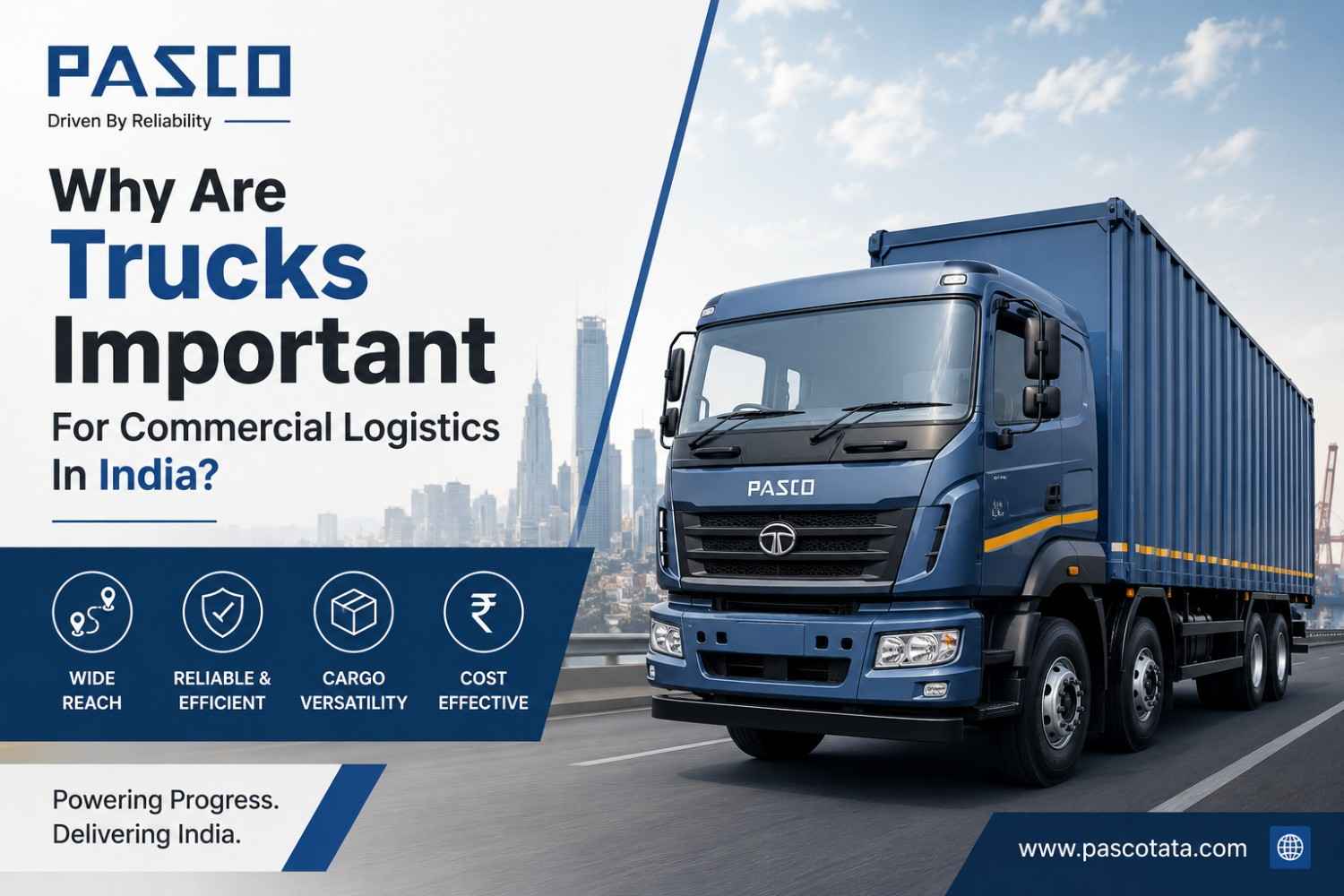
Why Are Trucks Important For Commercial Logistics In India?
Quick Highlights
- Trucks connect businesses with markets across India’s diverse road network.
- Different truck sizes suit different cargo and delivery requirements.
- Small trucks work well for local and city-based commercial deliveries.
- Heavy trucks support long-distance and high-volume goods transportation.
- Specialised trucks suit temperature-sensitive, liquid, and containerised cargo.
- Businesses should consider payload, routes, costs, maintenance, and safety.
- Proper truck selection can support smoother commercial logistics operations.
Have you ever wondered how goods reach shops, warehouses, factories, and customers across India? Trucks play a major role in this movement. They carry raw materials, finished products, food items, construction materials, machinery, and other goods between different locations.
For commercial logistics in India, trucks offer flexible road transport across cities, towns, industrial areas, and rural markets. Their different sizes and body types also allow businesses to choose vehicles from an authorized Tata Motors showroom in Delhi based on cargo type, distance, and delivery needs.
Why Are Trucks Important for Commercial Logistics?
Trucks are important because they connect manufacturers, suppliers, warehouses, retailers, and customers. Road transport can reach locations that may not have direct rail or air connections.
Businesses also use trucks for both short-distance and long-distance deliveries. A company can select a small commercial truck for local deliveries or a larger vehicle for high-volume cargo.
This flexibility makes trucks a key part of India’s commercial supply chain.
Trucks support several business activities, including:
- Moving raw materials to factories
- Transporting finished products
- Delivering goods to retailers
- Supplying construction sites
- Carrying agricultural produce
- Moving goods between warehouses
- Supporting e-commerce deliveries
- Transporting heavy industrial equipment
How Do Trucks Support Different Types of Businesses?
Almost every major industry needs road transport. Manufacturers use trucks to move materials and finished goods. Retailers use them to receive stock from warehouses and suppliers.
Construction companies also depend on commercial trucks. They transport cement, steel, bricks, machinery, sand, and other materials to project sites.
Agriculture also depends on road transport. Trucks and smaller commercial vehicles can carry crops, dairy products, fruits, vegetables, and other goods from production areas to markets.
Which Businesses Commonly Use Commercial Trucks?
The right truck depends on the cargo and delivery route.
Common users include:
- Manufacturing companies
- Construction businesses
- Retailers and wholesalers
- E-commerce companies
- Logistics companies
- Agriculture businesses
- Food distributors
- FMCG companies
- Furniture businesses
- Industrial suppliers
Why Are Trucks Useful for Last-Mile and Local Delivery?
Trucks can reach markets, shops, warehouses, and customer locations directly. This makes them useful for local distribution and last-mile delivery.
Smaller commercial trucks can work well on narrow city roads. They can carry daily stock to shops, restaurants, warehouses, and other businesses.
Larger trucks suit routes where businesses need to move bigger cargo volumes. Companies can select different truck sizes based on their daily delivery requirements.
How Do Trucks Help Reduce Delivery Delays?
Trucks offer direct point-to-point transportation. Businesses can plan routes based on delivery locations, cargo requirements, and road conditions.
Road transport also allows companies to serve several delivery points on one route. This can support regular supply schedules for retailers and distributors.
However, delivery times can still depend on traffic, weather, road conditions, loading time, and local restrictions. Good route planning plays an important role in commercial transport.
What Types of Trucks Are Used in Commercial Logistics?
Different cargo needs require different truck types. A small business may need a light commercial truck for local deliveries. A large distributor may require a heavy truck for high-volume cargo.
Common commercial truck categories include:
Light Commercial Trucks
These trucks suit smaller loads and local delivery routes. They work well for retailers, distributors, service businesses, and small manufacturers.
Medium Commercial Trucks
They offer greater carrying capacity. Businesses often use them for regional distribution and regular goods transport.
Heavy Commercial Trucks
They suit larger and heavier loads. Logistics companies and industrial businesses often use them for long-distance cargo movement.
Specialised Trucks
Some goods need specific vehicle bodies or equipment. Refrigerated trucks can carry temperature-sensitive products.
The truck body should match the cargo. Businesses should also consider payload, route, operating cost, and loading requirements.
Why Is Truck Selection Important for Businesses?
Choosing the wrong truck can increase operating costs and create delivery problems. A vehicle that cannot handle the required load may reduce productivity.
Businesses should consider several factors before purchasing or hiring a commercial truck:
- Type of cargo
- Average load weight
- Delivery distance
- Road conditions
- Fuel or energy requirements
- Loading and unloading needs
- Vehicle size
- Maintenance requirements
- Driver comfort and safety
- Expected daily usage
Are Trucks Important for India’s Rural and Remote Markets?
Yes. Trucks play a major role in connecting rural and semi-urban markets with larger supply centres.
Road networks allow commercial vehicles to carry goods into areas where other transport options may be limited.
Trucks can also collect agricultural products from smaller production areas and transport them to nearby markets or distribution centres.
How Do Trucks Support India’s Growing Logistics Needs?
India has a large and diverse market. Goods often need to travel across long distances before reaching their final destination.
Trucks support this movement by connecting different stages of the supply chain. A manufacturer can send products to a distribution centre.
The growth of online shopping has also increased the need for reliable road-based delivery.
What Should Businesses Check Before Buying a Commercial Truck?
Businesses should first understand their actual transport needs. Do not choose a truck only by looking at its size or purchase price.
Check the expected payload, route, mileage, service network, maintenance needs, cabin comfort, safety features, and availability of spare parts.
Businesses should also calculate the expected running cost. Fuel or energy use, tyres, servicing, insurance, permits, and driver costs can affect the total cost of operating a commercial truck.
A suitable truck should match the business’s daily work. Owners should always choose Tata Motors authorised service centre in Delhi to get their vehicles serviced.
The Bottom Line
Trucks are essential for commercial logistics in India because they connect factories, warehouses, markets, retailers, and customers. They support local and long-distance transportation across different industries. Businesses can choose light, medium, heavy, or specialised trucks based on their cargo, route, and delivery needs.
No, not at all. The right truck depends on your cargo, load size, delivery distance, and road conditions. A small business may find a light commercial truck more practical than a heavy truck.
Yes. Different truck sizes support different routes. Smaller trucks suit local deliveries, while medium and heavy trucks work better for regional and long-distance transportation.
Start with your daily cargo needs. Check the load weight, cargo type, travel distance, road conditions, loading method, and running costs before choosing a truck.
Yes. Some products need specific vehicle bodies. For example, temperature-sensitive goods may need refrigerated trucks, while containers may require container carriers.
No. A bigger truck can cost more to operate when your business does not need its full capacity. Choose a truck that matches your regular load and delivery requirements.