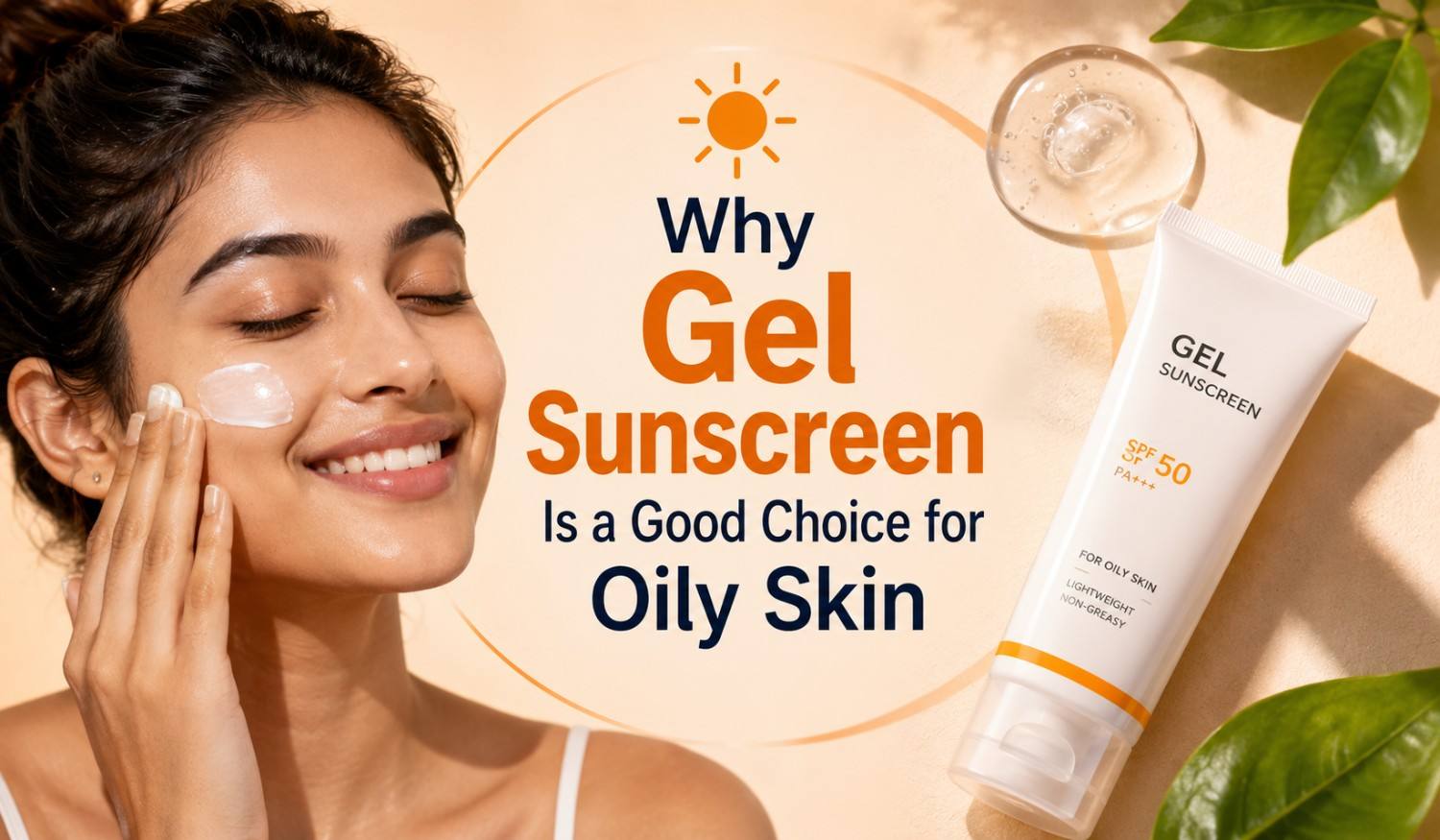
Why Gel Sunscreen Is a Good Choice for Oily Skin
Sunscreen is one of those skincare products that should not be skipped, regardless of your skin type. However, people with oily skin often have a different experience with sunscreen. A formula that feels comfortable on dry skin may leave oily skin feeling greasy, sticky, or heavy.
This is one reason gel sunscreens have become popular among people with oily and combination skin. Their lightweight texture can feel more comfortable, especially in warm and humid weather. But is gel sunscreen actually a good option for oily skin? The answer depends on the formula, your skin needs, and how you use it.
Why Does Oily Skin Need Sunscreen?
Oily skin produces more sebum than other skin types. This can make the face appear shiny and may also contribute to clogged pores and breakouts in some people.
It is easy to assume that sunscreen will make this problem worse, so some people avoid using it altogether. That is not a good idea.
Daily exposure to ultraviolet radiation can contribute to tanning, uneven skin tone, premature signs of ageing, and other forms of skin damage. Sunscreen helps protect the skin from these effects.
The important part is finding a sunscreen that you actually feel comfortable wearing every day. If the texture feels too heavy or greasy, you may be less likely to use enough of it or reapply it when needed.
What Makes Gel Sunscreen Different?
The main difference is the texture.
Gel sunscreens are generally designed to have a lightweight, easy to spread consistency. Many of them absorb quickly and leave less of a heavy or oily feeling compared with some richer sunscreen creams.
This can be particularly useful for people with naturally oily skin.
A good gel sunscreen should spread evenly across the skin without requiring excessive rubbing. It should also feel comfortable when layered over your regular skincare routine.
However, it is important to remember that not every gel sunscreen will work in exactly the same way. The overall feel depends on the ingredients, formulation, and your individual skin.
Benefits of Gel Sunscreen for Oily Skin
1. Lightweight Feel
One of the biggest reasons people with oily skin prefer gel sunscreens is their lightweight texture.
If you already experience excess oil during the day, applying a thick product on top of your skincare routine can feel uncomfortable. A lightweight gel formula may feel much easier to wear, particularly during the warmer months.
This can also make it easier to use sunscreen consistently every morning.
2. Less Greasy Finish
Nobody wants to apply sunscreen and immediately feel like their face has become more oily.
Many gel formulas are designed to provide a lighter finish compared with heavier cream based products. Depending on the formulation, this can help the skin feel less greasy after application.
That said, the finish can vary from one product to another. It is always worth checking the product description and ingredients rather than assuming every product labelled as a gel will have the same finish.
3. Comfortable in Hot and Humid Weather
Oily skin can become particularly uncomfortable in hot and humid conditions. Sweat and excess sebum can make heavier skincare products feel even more noticeable.
A lightweight gel sunscreen can be a practical choice in these conditions because of its lighter texture.
This is especially relevant for people who spend a lot of time outdoors or live in places where temperatures remain high for much of the year.
4. Easy to Layer With Other Skincare Products
Most people do not use sunscreen on completely bare skin. It is often applied after products such as a cleanser, serum, or moisturiser.
A sunscreen that feels too heavy can make the entire routine uncomfortable.
Gel sunscreen can work well as the final step of a morning skincare routine because its lightweight texture can make layering easier. The key is to allow each product to settle before applying the next one.
5. Can Work Well Under Makeup
Heavy sunscreen can sometimes affect how makeup sits on the skin. It may contribute to a greasy appearance or make foundation feel less comfortable.
A lightweight gel formula may be easier to wear underneath makeup, particularly if you have oily or combination skin.
Again, the actual result depends on the sunscreen and makeup products you use together. It is a good idea to test the combination before wearing it for an important event.
What Should You Look for in a Gel Sunscreen?
Choosing a sunscreen based only on its texture is not enough. Sun protection should always come first.
When looking for a gel sunscreen for oily skin, consider the following factors.
Broad Spectrum Protection
Look for a sunscreen that offers broad spectrum protection. This means it is designed to protect the skin from both UVA and UVB radiation.
SPF 30 or Higher
For everyday use, an SPF of 30 or higher is generally a sensible choice. If you are spending extended periods outdoors, you may need to pay particular attention to application and reapplication.
Lightweight Texture
If you have oily skin, look for a formula that feels comfortable rather than heavy or greasy. A lightweight texture can make daily use easier.
Non Comedogenic Formula
If you are prone to clogged pores or breakouts, you may prefer a sunscreen labelled non comedogenic. This means the product has been formulated and tested with the intention of being less likely to clog pores.
It does not guarantee that a product will never cause breakouts because everyone’s skin can respond differently.
Suitable for Your Skin Type
A sunscreen does not need to be marketed specifically as a gel to work for oily skin. What matters most is how the formulation performs on your skin.
For instance, Deconstruct offerssunscreen formulations designed around lightweight textures, which can be worth considering when comparing options for daily use. The important thing is to choose a formula that feels comfortable and provides the level of protection your skin needs.
Gel Sunscreen vs Cream Sunscreen
Both gel and cream sunscreens can provide effective sun protection. The difference is often more about texture and comfort than protection itself.
Cream sunscreens may be more comfortable for people with dry or very dry skin because they can provide a richer feel. Gel sunscreens are often preferred by people who want something lighter.
For people searching for a sunscreen for oily skin, a gel formula may therefore be more comfortable for everyday use.
However, there is no universal rule that gel sunscreen is always better. A well formulated cream sunscreen can also work perfectly well for oily skin.
The best sunscreen is ultimately one that provides adequate protection and that you are comfortable using consistently.
How to Apply Gel Sunscreen Correctly
Even a good sunscreen will not provide the expected protection if it is not applied properly.
Apply sunscreen as the last step of your morning skincare routine. Make sure you apply enough to cover the exposed areas of your face and neck.
Do not forget areas that are often overlooked, such as the ears and the sides of the face.
If you are outdoors for a long time, sweating, or swimming, sunscreen needs to be reapplied. The exact reapplication schedule can depend on the product and your activities, so follow the instructions provided on the sunscreen packaging.
It is also important to remember that sunscreen is only one part of sun protection. Hats, sunglasses, shade, and protective clothing can also help reduce direct sun exposure.
Common Mistakes People With Oily Skin Make
One of the most common mistakes is skipping sunscreen because the skin already feels oily.
Another mistake is using too little sunscreen because the person does not like the feeling of the product. Using less than the recommended amount can reduce the level of protection.
Some people also choose products solely because they are labelled for oily skin without checking whether the sunscreen provides broad spectrum protection and an appropriate SPF.
Finally, do not assume that sunscreen only matters when the sun looks strong. UV exposure can occur even when the weather is cloudy.
Is Gel Sunscreen Right for Everyone With Oily Skin?
Gel sunscreen can be a good option for oily skin, but there is no single sunscreen that works for everyone.
Your skin may react differently to certain ingredients or formulations. If you have oily and acne prone skin, it can be useful to look for lightweight, non comedogenic options and introduce new products one at a time.
Pay attention to how your skin feels throughout the day. If a sunscreen leaves you feeling excessively greasy, causes discomfort, or does not sit well with your other products, another formulation may be a better fit.
Final Thoughts
For people with oily skin, finding a sunscreen that feels comfortable can make a big difference to daily skincare habits. Gel sunscreens are often appealing because they tend to have a lightweight texture and can feel less heavy on the skin.
However, texture should not be the only deciding factor. Look for adequate broad spectrum protection, an appropriate SPF, a formulation that suits your skin, and a finish that you are comfortable wearing every day.
Most importantly, choose a sunscreen that you will actually use consistently. A sunscreen that fits comfortably into your routine is much more useful than one that stays unused because it feels too heavy or greasy.