PDRN Toner: What Is PDRN Toner and Is It Really Worth Trying in 2026?
The first time a friend told me her toner contained salmon DNA, I laughed. Then I read the ingredient list, dug into the research, and realized I was the one who was behind.
PDRN has moved from a clinic treatment to a bottle you can buy online in minutes, and 2026 is the year it shows up in nearly every K-beauty conversation. That raises a fair question. Is PDRN toner a smart upgrade for your routine, or just another pink bottle with a great backstory?
This guide gives you a straight answer. You will learn what PDRN toner is, what the science supports, what it cannot do, and exactly how to use it if you decide to try it.

What Is PDRN Toner? The Salmon-DNA Skincare Trend, Explained
PDRN stands for polydeoxyribonucleotide. It is a mix of DNA fragments, most often taken from salmon or trout and purified so that proteins and other impurities are removed. In medicine, doctors have used PDRN in injectable form for years to support wound and tissue healing.
Skincare brands, especially in Korea, adapted that idea for everyday products. A PDRN toner is a watery, lightweight liquid you apply after cleansing and before serum or moisturizer. Most formulas pair PDRN with supporting ingredients such as niacinamide, centella asiatica, peptides, or hyaluronic acid. Some come in a soft pink tint, which is why you will see so many pink bottles online.
It is important to separate two things people often mix up. Clinic treatments, sometimes called salmon DNA facials or polynucleotide injections, deliver PDRN beneath the skin with a needle. A toner stays on the surface. That means a toner is a hydration and barrier-support step, not a shortcut to injectable results.
How Does PDRN Toner Work? The Science Behind the Glow
Lab and clinical research suggests PDRN activates a receptor called adenosine A2A. When that receptor switches on, cells get signals linked to tissue repair, calmer inflammation, and stronger activity in fibroblasts, the cells that make collagen. That is the reason PDRN earned a reputation in wound-healing medicine.
Here is the honest catch. Most of that evidence comes from injected PDRN, not from toners. PDRN is a large molecule, and your skin’s outer layer is built to keep large molecules out. Brands use smaller fragments and delivery technology to improve absorption, but independent human studies on how much a toner delivers into deeper skin are still limited.
So what can you reasonably expect? Treat a PDRN toner as a well-formulated hydrating step that may also support your skin barrier. The humectants and soothing ingredients in the bottle do real, visible work. The regenerative promise is promising but not yet proven at the toner level.
Reality check: If a brand promises that a toner will “rebuild collagen” or “replace injectables,” treat that as marketing, not science.
Top Benefits of PDRN Toner: What You Can Actually Expect
Better hydration and a steadier skin barrier
This is the benefit most people notice first. If your skin feels tight after cleansing, or you recently overdid exfoliants or retinoids, a hydrating PDRN toner can help skin feel comfortable again within days.
Smoother-looking texture and more even tone
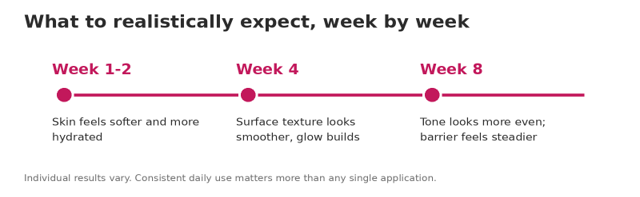
With consistent use, many people report that skin looks smoother and less dull. Well-hydrated skin reflects light better, and that alone creates a fresher look. Give it four to eight weeks before you judge.
A lightweight layer that plays well with others
Good PDRN toners absorb quickly and do not leave a sticky film. That makes them easy to wear under serums, moisturizer, and sunscreen, which matters if you use a multi-step routine.
PDRN Toner vs. Regular Toners and PDRN Serums: Key Differences
PDRN toner sits between a basic hydrating toner and a concentrated PDRN serum. The table below shows how they compare.
| Feature | Regular hydrating toner | PDRN toner | PDRN serum or ampoule |
| Main job | Hydrate and prep skin | Hydrate, soothe, support barrier | Targeted treatment step |
| Texture | Watery | Watery to slightly silky | Lightweight gel or liquid |
| Typical price in the US | $10 to $25 | $15 to $40 | $20 to $60 and up |
| Best for | Basic routines | Dull or dehydrated skin | People who want a stronger boost |
Compared with a standard hydrating toner, a PDRN toner adds a reparative ingredient that regular formulas lack. Compared with a serum, it usually carries less PDRN, but it is easier to use daily and costs less.
Clinic treatments sit in a different category. Polynucleotide or PDRN injection sessions often cost several hundred dollars each, which explains why at-home options have grown so fast. If you want to test the ingredient before committing to a clinic, a toner is a low-risk place to start.
How to Use PDRN Toner in Your Routine (Step by Step)
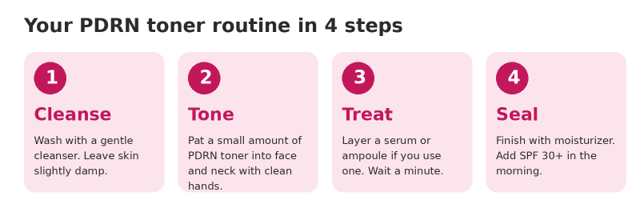
Quick answer: Apply PDRN toner to clean, damp skin in the morning and at night. Pat it in with your hands, follow with a serum if you use one, then seal with moisturizer. Add sunscreen in the morning.
- Cleanse with a gentle, non-stripping cleanser. Leave your skin slightly damp.
- Pour a small amount of toner into your palm and press it into your face and neck. Pat, do not rub.
- Wait about a minute, then layer a serum or PDRN ampoule if you use one.
- Seal everything with a moisturizer that suits your skin type.
- In the morning, finish with broad-spectrum SPF 30 or higher.
Three practical tips before you start
- Patch test first. Apply a small amount behind your ear or on your inner forearm for 24 hours.
- Introduce one new product at a time. If a reaction happens, you will know exactly what caused it.
- Go easy with strong actives. Avoid layering exfoliating acids or retinoids on the same night during your first week.
Is PDRN Toner Worth Trying in 2026? Pros, Cons, and Who It Is For
What works in its favor
- It is an affordable way to try a trending ingredient without a clinic visit.
- Most formulas are gentle, lightweight, and easy to layer.
- It supports hydration and comfort, especially for tired or over-exfoliated skin.
What to keep in mind
- Results are gradual and modest. A toner will not match injectable treatments.
- Evidence for topical PDRN is still thinner than evidence for sunscreen, retinoids, or vitamin C.
- Some formulas include fragrance or dye, which can bother very reactive skin.
- Fish or shellfish allergies call for extra caution. Talk to your doctor first.
Who should try it
PDRN toner is a good fit if your skin looks dull or dehydrated, if you enjoy a layered K-beauty routine, or if your barrier feels worn down. It is probably not the best first purchase if you are building a routine from scratch. Start with a gentle cleanser, moisturizer, and sunscreen, then add a PDRN toner as a bonus step.
Final Verdict: Should You Add PDRN Toner to Your Routine?
My take: yes, it is worth trying for most skin types, as long as your expectations stay realistic. You are buying a pleasant, hydrating, barrier-friendly toner with an interesting ingredient, not a replacement for sunscreen, retinoids, or professional care.
Remember the three rules that matter most. Patch test first, use it consistently for at least four weeks, and pair it with daily SPF. Do those three things and you will get a fair read on whether the glow is real for your skin.
Your next step: Pick one fragrance-free PDRN toner, patch test it this week, and track your skin for four weeks. Want a head start? Subscribe to our newsletter for a free 4-week PDRN routine tracker and weekly ingredient breakdowns, then share your results in the comments.
PDRN Toner FAQs
PDRN stands for polydeoxyribonucleotide. It is a purified DNA fragment, usually sourced from salmon or trout, that brands add to toners, serums, and masks to support hydration and skin repair.
Most PDRN comes from salmon or trout DNA. Manufacturers purify it heavily, so the finished toner should not smell fishy. Check the label if you have a fish allergy, and ask your doctor before using it.
Most people feel softer, more hydrated skin within one to two weeks. Changes in texture and tone take longer, usually four to eight weeks of daily use.
Yes. Most formulas are designed for morning and night use. Start once a day for the first week, watch how your skin responds, and then move to twice daily.
No. A toner hydrates and preps your skin, while a serum or ampoule usually delivers a more concentrated dose. You can use both: apply the toner first, then the serum, then moisturizer.
No large human studies confirm that topical PDRN is safe or unsafe in pregnancy. Check the full ingredient list with your OB-GYN or dermatologist before you add any new product.
Many people with sensitive or oily skin tolerate it well, especially fragrance-free versions. Patch test on your inner forearm or behind your ear for 24 hours before you apply it to your face.
Hyaluronic acid, niacinamide, centella asiatica, and ceramides pair well with it. Skip strong exfoliating acids and retinoids on the same night until you know how your skin handles PDRN.
It may soften the look of fine lines by improving hydration, but it is not a proven wrinkle treatment. Daily sunscreen and a retinoid have far stronger evidence for anti-aging.
It is worth trying if you want a hydrating, barrier-friendly step and you accept gradual results. Skip it if you expect injectable-level changes from a toner.
Disclaimer: This article is for general information only and is not medical advice. Talk to a board-certified dermatologist before you start a new skincare product, especially if you have a skin condition, allergies, or are pregnant.
Further reading: Squadrito F. et al., “Pharmacological Activity and Clinical Use of PDRN,” Frontiers in Pharmacology, 2017 (verify citation details before publishing).