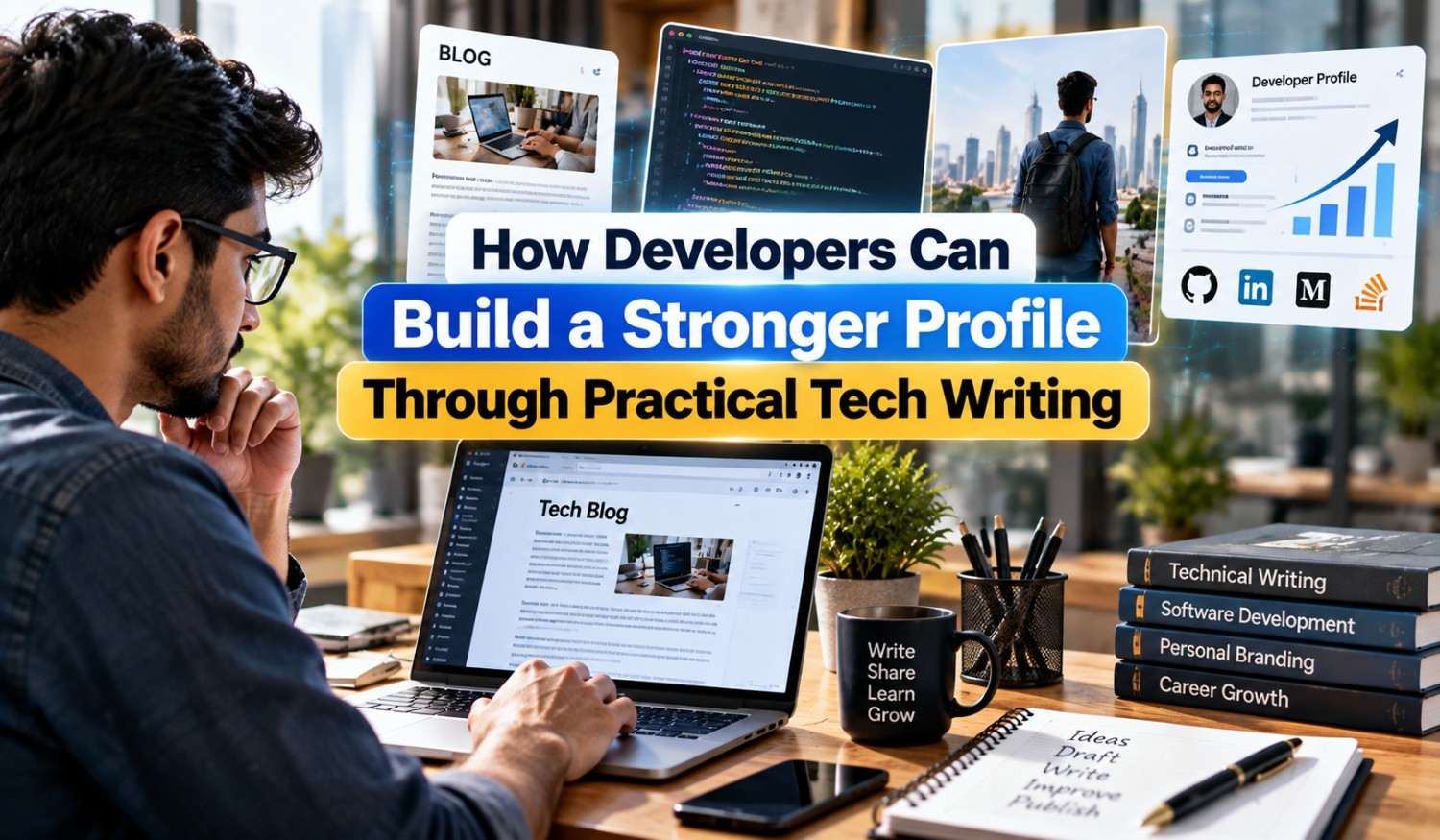
How Developers Can Build a Stronger Profile Through Practical Tech Writing
Programming skills are often judged by what a developer can build, but the ability to explain how a project works can matter too. Clear technical writing helps other people solve problems, gives potential clients a better sense of your expertise and turns lessons from everyday work into a useful public resource. For developers looking to grow their professional profile, publishing thoughtful articles can complement a portfolio of code and completed projects.
Why Technical Writing Matters
A working application demonstrates technical ability, while an article can show how you approach decisions. Explaining why you selected a framework, how you tracked down a performance issue or what you learned from a deployment gives readers a view of your process. It can also help make complex topics easier to understand for people who are learning or evaluating possible solutions.
Writing is especially valuable when it is specific. A broad article about “the future of software” may be difficult to distinguish from many others. A focused account of improving a particular database query, structuring a small API or avoiding a common testing mistake gives readers something they can apply. Where a topic involves changing tools or versions, state the context so the advice does not appear universal.
Choose Topics That Solve Real Problems
Good article ideas often come from questions that recur in your work. A support request, an issue raised during code review or a bug that took several attempts to diagnose may point to a subject other developers are searching for. Before drafting, identify the reader and the problem the article will help them address.
- Explain a decision: Describe the requirements behind a technical choice, including what alternatives you considered.
- Show a process: Break a task into clear stages, such as setting up a test environment or tracing an error.
- Share a lesson: Explain what went wrong in a project and what you would change next time.
- Keep examples useful: Use small, readable code samples and explain their assumptions.
Accuracy and readability should go together. Check code before publishing, define specialist terms and separate personal experience from general recommendations. If a method has trade-offs, describe them rather than presenting one approach as the answer for every project.
Find a Relevant Place to Publish
Once you have a draft, consider who should read it. A tutorial for beginners may suit a different publication from an in-depth discussion of software architecture. Look at a site’s existing articles, subject areas, formatting and audience before pitching. A relevant placement is more useful than sending the same generic proposal everywhere.
Developers and technology businesses can use directories to explore potential outlets. For example, iCopify’s programming guest-posting listings bring together more than 1,200 websites and blogs covering coding and software development. Treat a directory as a starting point: review each publication individually, check that its readership matches your subject and follow its submission guidelines.
A pitch should make the proposed value obvious. Offer a precise working title, explain the reader’s problem and outline what the article will cover. Avoid disguising a sales pitch as an educational piece. Readers are more likely to trust an article that explains a method fairly, including its limits, than one that repeatedly promotes a product or service.
Turn Articles into a Professional Portfolio
Published work can support conversations with employers and clients, but it works best when presented thoughtfully. Keep a short list of your strongest pieces and add a sentence about the problem each one addresses. A collection of relevant, well-edited articles can show communication skills alongside technical knowledge; a long list without context may be harder to assess.
Freelancers can also make their services easier to understand by describing a concrete result they can deliver. A professional freelance offer should have a clear title, defined deliverables and a fair scope, so a buyer can tell what is included before placing an order. Osdire supports service listings across categories such as programming and technology, writing, design, video and marketing. Its flat pricing has no hidden fees, and payment is held securely while an order is in progress, then released after the buyer approves the delivered work.
For example, “I will debug a Python script and provide an annotated fix” communicates more than “I offer coding help.” A strong service description can specify the expected input, what files or notes the buyer receives, the number of revisions and any limits on the work. Clear boundaries help prevent misunderstandings and make it easier to decide whether a request is a good fit.
Build Consistency Without Chasing Volume
There is no need to publish constantly. A realistic schedule gives you time to research, test examples and revise. Keep notes when you solve an interesting problem, then turn the most reusable lessons into articles. Update older pieces when tools or instructions change, and make corrections visible where appropriate.
Technical writing is not a substitute for strong engineering, and one article will not guarantee clients or career opportunities. Its value comes from the connection between useful knowledge, a relevant audience and reliable work. By choosing practical topics, publishing in suitable places and presenting services with clear expectations, developers can make their expertise easier to discover and understand.