
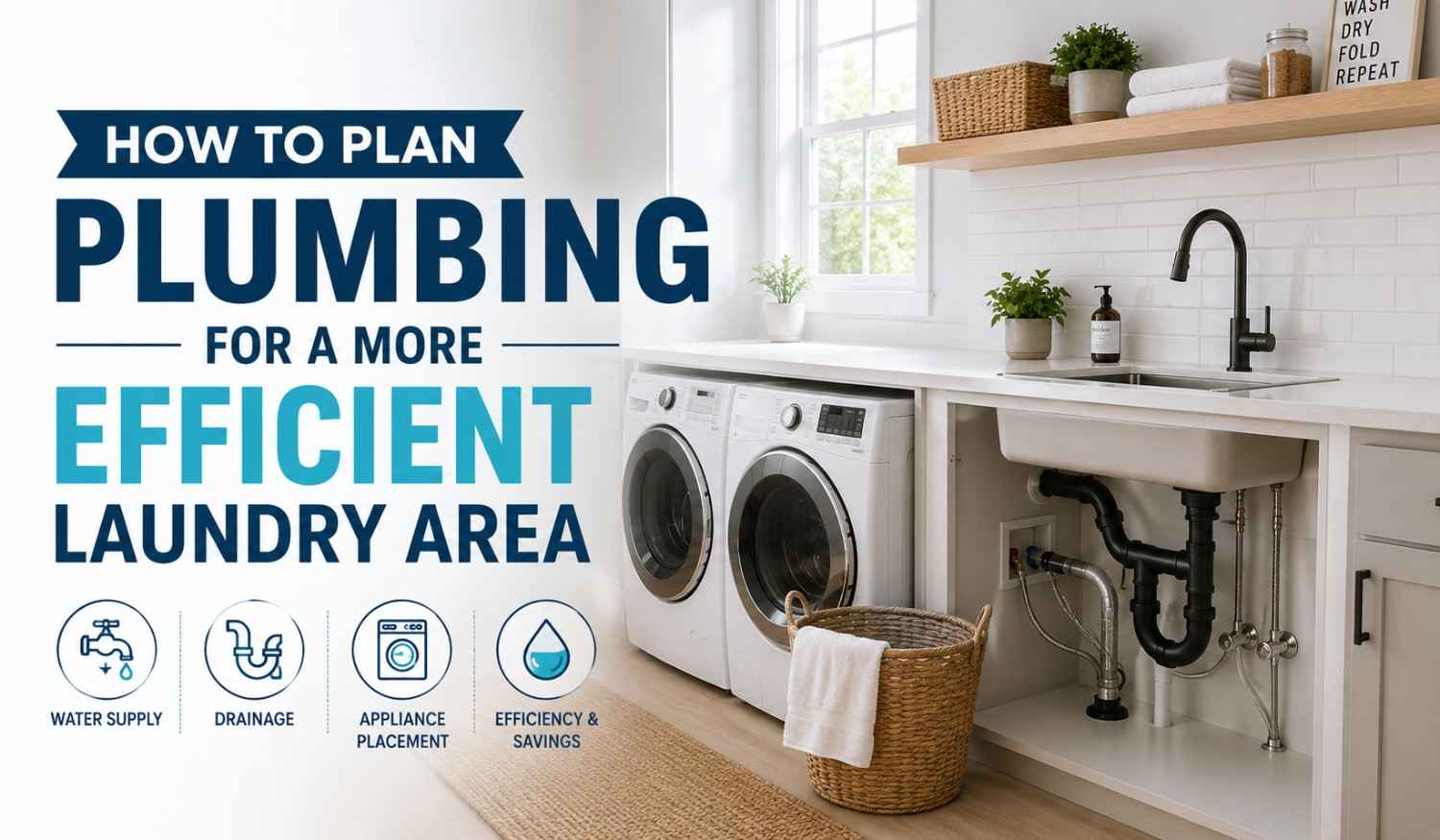
A laundry room may not be the most decorative part of a home, but it is one of the spaces where good planning makes a big difference. A washer needs reliable water supply, proper drainage, safe shut-off access, and a wall layout that keeps everything neat and serviceable. Whether you are renovating a laundry closet, upgrading an older utility room, or moving the washer to a new location, plumbing should be planned before the walls are closed and before appliances are delivered.
A more efficient laundry area is not just about saving space. It is about making everyday use easier, reducing leak risks, and avoiding future repair headaches.
Start with the Washer Water Supply
Most washing machines need both hot and cold water connections. These supply lines should be easy to access, clearly positioned, and fitted with reliable shut-off valves. Washer valves allow homeowners to turn off water quickly when replacing hoses, servicing the machine, or responding to a leak.
During a renovation, it is better to avoid placing valves too low behind the machine where they are hard to reach. Instead, plan the valve location at a comfortable height above the washer, usually inside or near a laundry outlet box. This keeps the wall area cleaner and makes the shut-off points easier to see.
If you are replacing old valves, check the connection type before ordering parts. Some homes may use copper, PEX, CPVC, or threaded connections. Choosing the right valve type early helps prevent delays once the wall is open.
Use a Laundry Outlet Box for a Cleaner Layout
A laundry outlet box is one of the simplest upgrades for a cleaner and more organized wall. Instead of having loose valves, hoses, and drain lines scattered across the wall, an outlet box groups the washer connections into one neat recessed area.
A typical laundry outlet box may include hot and cold supply valves, a drain opening, and sometimes built-in water hammer arrestors. This setup gives the laundry area a more finished look, especially in small laundry rooms or closet-style spaces where the washer and dryer are highly visible.
For homeowners planning a remodel, using an outlet box can also make future maintenance easier. The washer hoses connect in one clear location, and the drain hose has a dedicated place to sit. If you are sourcing parts for a laundry renovation, stores like PlumbingSell offer plumbing supplies that can help homeowners and contractors plan a more organized installation from the start.
Choose the Right Supply Hose Length
Supply hoses are easy to overlook, but the wrong hose length can create problems. If the hoses are too short, they may pull tightly when the washer is moved slightly for cleaning or service. If they are too long, they may loop awkwardly behind the machine and make the area look messy.
Before buying hoses, measure the distance between the washer connections and the wall valves. Add enough extra length so the washer can be moved slightly without stressing the hose, but avoid excessive slack. In many laundry areas, a clean hose path is safer and easier to inspect.
Homeowners should also consider hose quality. Braided stainless steel washer hoses are commonly used because they are more durable than basic rubber hoses. No matter which type is used, hoses should be checked regularly for wear, bulging, or loose connections.
Plan Drainage Before the Washer Is Installed
Good drainage is just as important as water supply. A washing machine releases water quickly, so the drain system must be properly sized and positioned. Poor drainage planning can lead to slow draining, overflow, unpleasant smells, or water backing up during a wash cycle.
The washer drain hose usually discharges into a standpipe or laundry box drain. During renovation, make sure the standpipe height and drain connection follow local plumbing requirements. The drain should also be vented correctly so water can flow smoothly.
If the laundry area is being moved to a different part of the home, drainage planning becomes even more important. It is not enough to simply run a water line to the new location. The drain route, pipe size, slope, and venting all need to be considered before the final layout is approved.
Consider Water Hammer Arrestors
A washing machine valve opens and closes quickly during operation. This sudden change in water flow can sometimes cause banging or knocking sounds in the pipes, known as water hammer. Over time, repeated shock can be annoying and may add stress to the plumbing system.
Water hammer arrestors help absorb this pressure shock. Many modern laundry outlet boxes include arrestors built in, or they can be added separately depending on the plumbing setup. For homeowners who already hear pipe banging when the washer runs, adding arrestors during a renovation is a practical upgrade.
It is much easier to include this feature while the wall is open than to retrofit it later. That is why laundry plumbing should be planned as a complete system instead of just a pair of valves and a drain.
Create a Wall Layout That Is Easy to Maintain
A clean laundry wall layout should make the space look better and work better. Keep the valves, outlet box, drain, electrical outlet, and dryer vent arranged in a logical way. Avoid crowding everything into one awkward corner or placing plumbing behind appliances where it cannot be reached.
The goal is simple: when the washer needs to be pulled out, the homeowner should be able to see and access the supply hoses, shut-off valves, and drain connection without confusion. This is especially important in tight laundry closets, rental properties, or homes where appliances may be replaced in the future.
Before finishing the wall, take photos of the plumbing layout. These photos can be useful later if you need to locate pipes, troubleshoot a problem, or explain the setup to a plumber.
Final Thoughts
A more efficient laundry area starts behind the wall. Washer valves, outlet boxes, supply hose length, drainage, water hammer arrestors, and wall layout all play a role in how safe, clean, and easy the space is to use.
For homeowners planning a laundry renovation, the best approach is to choose the right plumbing parts early and think through maintenance access before installation begins. With proper planning and reliable supplies from sources such as PlumbingSell, a laundry area can become cleaner, safer, and much easier to manage for years to come.