
Key Takeaways
- JCB machines are essential for modern road repair projects
- They help break, dig, lift, and clear materials efficiently
- Proper use improves road quality and durability
- Faster repairs reduce traffic disruption and delays
- Understanding their role helps you better relate to road work around you
Have you noticed how fast road repairs happen now compared to a few years ago? You might be wondering what changed. Are machines really making that much difference? And what exactly do JCB machines do on a road repair site?
If you have ever passed by a construction zone, you have likely seen a yellow machine digging, lifting, or clearing debris. That is usually a JCB machine.
But many people still ask simple questions. What is a JCB machine? How does it work? Why do engineers depend on it so much for road repair?
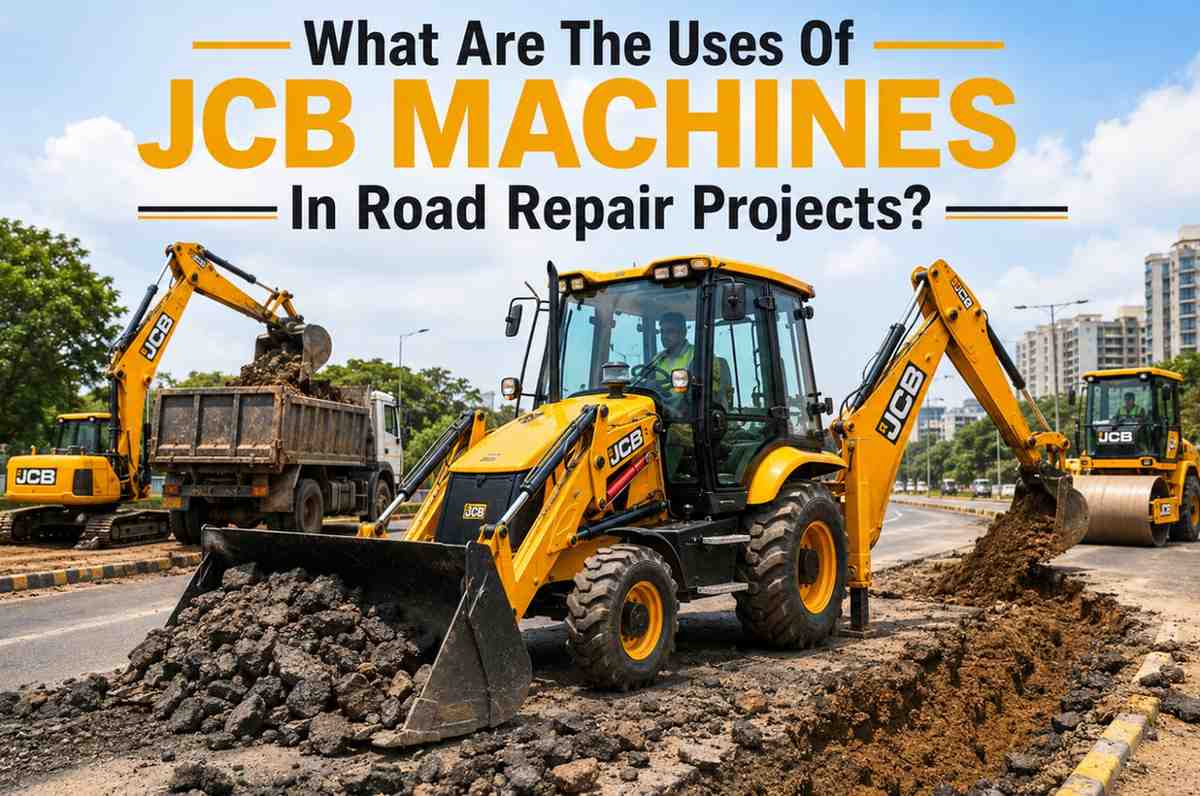
In simple terms, a JCB machine is a type of heavy equipment used for digging, lifting, loading, and clearing materials.
In road repair projects, it plays multiple roles from breaking damaged surfaces to preparing the ground for fresh construction.
Let us find out how these machines are used and why they are such an important part of modern road repair work in this article by one of the best JCB telescopic handler dealers in Palwal –
Top 10 Uses of JCB Machines in Road Repair Projects
Breaking damaged road surfaces quickly
One of the first steps in road repair is removing the damaged surface. JCB machines are fitted with tools that can break concrete and asphalt with ease. This saves a lot of manual effort.
Instead of workers spending hours with handheld tools, the machine completes the job faster and more evenly. This matters because a clean and level base is needed for proper repair.
Excavation for road base repair
Sometimes the damage is not just on the surface. The base layer underneath may also need fixing. JCB machines dig deep into the road to remove weak or damaged soil.
This step ensures the new road structure stays strong for a longer time. Without proper excavation, repairs may fail quickly and lead to repeated issues.
Loading and moving debris efficiently
After breaking and digging, a lot of debris is left behind. JCB machines come with loader buckets that help collect and move this waste.
They load debris into trucks quickly, keeping the worksite clean and organized. This speeds up the entire repair process and reduces traffic disruption.
Leveling and grading the surface
Before laying new material, the surface needs to be properly leveled. JCB machines are used to smooth out uneven areas.
A well-leveled surface ensures that the new road layer is even and durable. This improves driving comfort and prevents water from collecting on the road.
Digging drainage channels
Water is one of the biggest reasons roads get damaged. JCB machines help dig drainage channels along the road.
Proper drainage prevents water from weakening the road structure. This increases the life of the repaired road and reduces future maintenance needs.
Lifting and placing heavy materials
Road repair often involves moving heavy materials like pipes, concrete blocks, and barriers. JCB machines can lift and place these items easily.
This reduces the need for multiple workers and ensures precise placement. It also improves safety on the site by reducing manual handling.
Supporting utility repairs under roads
Many roads have pipelines, cables, and drainage systems underneath. If there is a problem, the road needs to be opened up.
JCB machines help dig carefully around these utilities without causing damage. This makes repair work more controlled and less risky.
Compacting soil preparation support
While JCB machines are not compactors, they assist in preparing the soil before compaction. They help spread materials evenly.
This ensures that when compacting machines do their job, the base is uniform. A strong base leads to a longer lasting road.
Clearing obstacles and roadside debris
Sometimes road repair involves clearing trees, stones, or other obstacles. JCB machines are strong enough to handle these tasks.
Clearing the area properly allows repair work to start without delays. It also improves visibility and safety for workers.
Ending Words
JCB machines available at JCB compactor showroom have completely changed how road repair projects are handled. From breaking damaged surfaces to preparing the base and clearing debris, they play a role at every stage. So next time you see a JCB machine on the road, you will know exactly what it is doing and why it matters.
FAQs
JCB machines offer strong performance, easy control, and versatility, which suits different road repair activities and tight working spaces.
Backhoe loaders are commonly used for small repairs due to compact size, flexible movement, and ability to perform multiple tasks.
JCB machines reduce manual effort, speed up excavation and leveling, and ensure consistent work quality across repair projects.
JCB machines are used on highways, city roads, village roads, and construction sites for various repair and maintenance tasks.
Check machine size, fuel efficiency, attachment options, and ease of operation based on the type of road repair work required.
Yes, JCB machines are useful for digging damaged sections, clearing debris, and preparing the surface before resurfacing work begins.
They perform multiple tasks like digging, lifting, and grading, which reduces delays and keeps repair projects moving smoothly.