Hypochlorous Acid Spray: What Is Hypochlorous Acid Spray and Why Is It Trending in the US?
Your body has been making hypochlorous acid for as long as you have had white blood cells. Hospitals have used it on wounds for more than a hundred years. So why, in 2026, is it sitting on the shelf next to your sunscreen at Walmart?
That journey from clinic to bathroom cabinet explains why hypochlorous acid spray has become one of the most talked-about skincare products in the United States. This guide covers what it is, why shoppers keep adding it to their carts, what the research does and does not support, and how to choose and use a bottle without wasting money or irritating your skin.
What Is Hypochlorous Acid Spray?
| Quick answer Hypochlorous acid spray is a fine mist containing hypochlorous acid (HOCl), a mild, water-based antimicrobial that your body’s white blood cells also produce. Manufacturers stabilize it at a skin-friendly pH so it can cleanse, calm irritation, and reduce surface bacteria without alcohol, fragrance, or harsh detergents. |
How it works
When immune cells engulf germs, they release HOCl as part of a process called the respiratory burst. The molecule damages the proteins, DNA, and fats of microbes, which is how it takes out bacteria such as MRSA, E. coli, and Pseudomonas in lab settings. Dermatology researchers also describe anti-inflammatory effects, including reduced histamine activity, which helps explain why people reach for it when skin looks red or itchy.
Why it is not bleach
This is the question we hear most. Bleach and hypochlorous acid both involve chlorine, but they are different chemical forms. Household bleach is mainly sodium hypochlorite, which dominates at high pH and is both harsher and less germ-killing than HOCl. A good spray keeps the solution in a mildly acidic range, where HOCl is the main player. The chart below shows why pH control matters so much.
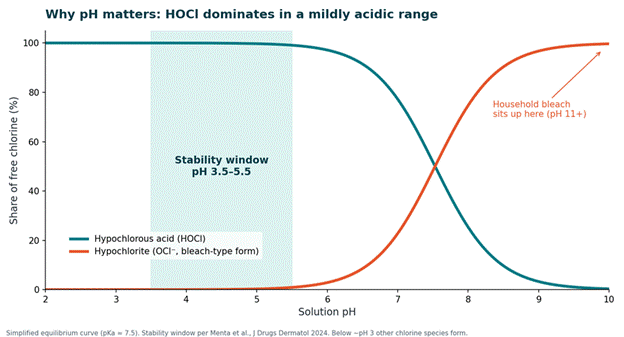
Practical takeaway: never use household bleach or an unlabeled disinfectant on skin as a “homemade” version. The concentration and pH are what make a skin-safe product different.
Why Is Hypochlorous Acid Spray Trending in the US?
Several forces landed at the same time. Here are the three that matter most.
1. It arrived with clinical credibility
Unlike many viral ingredients, HOCl did not start as a marketing term. Its medical use as a wound disinfectant goes back to World War I, and the FDA has cleared it for several uses, including wound care and eyelid and oral hygiene. A 2024 review in the Journal of Drugs in Dermatology notes that social media then pushed it into daily routines as a post-workout refresher and an acne helper. That mix of history and hype is rare, and it builds trust fast.
2. Retail made it easy to find
In August 2026, the brand Magic Molecule announced that its FDA-cleared Daily Skin spray was reaching more than 4,500 Walmart stores and online, according to industry outlet HAPPI. On Amazon, July 2026 ranking data from ASINSIGHT shows a handful of names, including Tower 28’s travel-size SOS spray and Prequel Skin’s face-and-body spray, leading the category. Most bottles cost between $13 and $20, according to SaleHoo’s market tracking, which makes trying one a low-risk purchase.
3. It fits how Americans shop for skincare now
Shoppers want shorter ingredient lists, alcohol-free formulas, and products that do more than one job. A single mist can serve as a toner, a post-gym refresh, and a quick clean-up for irritated spots. Marketplace data also suggests demand peaks in July, when heat, sweat, and travel push people toward portable hygiene products.
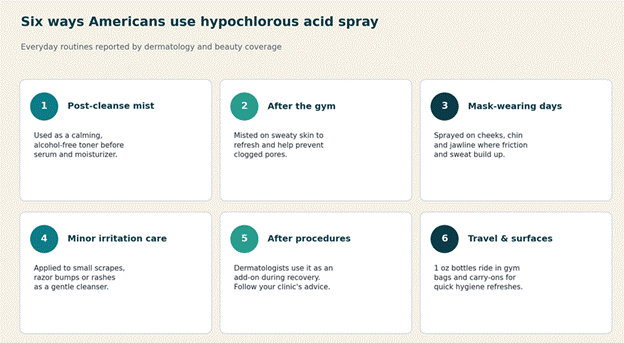
A fair caveat: a product being popular does not prove every claim made about it. The next section separates what is well supported from what is still emerging.
What Does the Research Actually Say?
The evidence is uneven. It is strong in one area, promising in a few, and thin in others.
| Use | What studies suggest | Our read |
| Wound care | HOCl lowers microbial load in infected wounds, and higher concentrations cut germs more in lab comparisons. One study found better skin regrowth than saline. | Best supported |
| Itch in eczema | A human study reported less itch within three days with no serious side effects, and another showed fewer Staph aureus colonies within minutes. | Promising, small studies |
| Acne | One comparison found HOCl solution matched benzoyl peroxide for inflammatory facial lesions. | Promising, needs more trials |
| Seborrheic dermatitis | A gel produced about a 33% improvement in investigator scores within 14 days in mild-to-moderate cases. | Early evidence |
| Post-procedure care | Dermatology commentary favors it as an add-on because it is less harsh on tissue than alcohol-based antiseptics. | Clinician-guided use only |
The honest summary: most skin studies are small, and results depend on concentration, formulation, and stability. A spray is a supportive step, not a replacement for prescription acne or eczema treatment. If you are managing a diagnosed condition, ask your dermatologist where it fits.
How to Choose a Good Hypochlorous Acid Spray
Two bottles with similar labels can behave very differently, because HOCl breaks down when exposed to light, heat, air, and the wrong pH. Use this checklist when you shop.
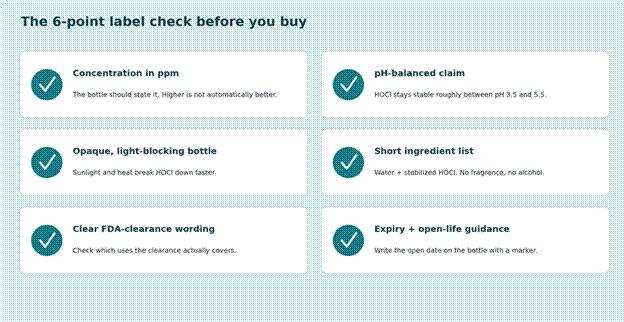
- Look for a stated ppm. Labels you will see on shelves include roughly 150 to 250 ppm. Dermatology commentary notes that very high concentrations can degrade faster, so higher is not automatically better.
- Confirm the pH claim. Stability is best between about pH 3.5 and 5.5, according to published dermatology research.
- Pick an opaque, fine-mist bottle. Sunlight breaks HOCl down quickly. In one study, chlorine loss began on day four in sun-exposed solution versus day 14 in sheltered solution.
- Keep the ingredient list short. Purified water and stabilized HOCl is the cleanest pattern. Fragrance, alcohol, and extra preservatives are common causes of reactions.
- Read the FDA wording closely. “FDA-cleared” applies to specific intended uses. Check what the label says it is cleared for before assuming it covers your goal.
- Track the dates. Sealed bottles often list 12 to 24 months of shelf life. Once opened, plan on roughly one to three months. Write the open date on the bottle with a marker.
Skip DIY. Board-certified dermatologists warn against diluting disinfectants or mixing your own HOCl at home, because concentration and pH are hard to control without lab equipment.
How to Use Hypochlorous Acid Spray Safely: Step by Step
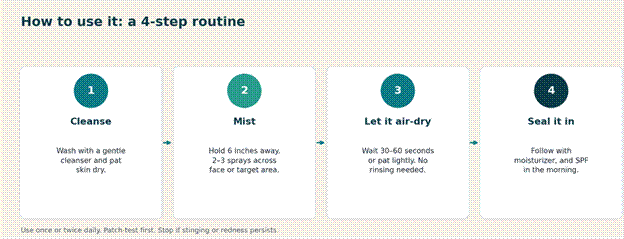
Here is the simple routine most dermatologists describe for facial use:
- Cleanse and pat dry. Start with a gentle cleanser so the spray can work on clean skin.
- Mist from about six inches away. Use two to three sprays over the face or the area you are treating.
- Let it air-dry. Wait 30 to 60 seconds, or pat lightly. You do not need to rinse.
- Layer your routine. Follow with moisturizer, and sunscreen in the morning.
- Repeat once or twice a day. Morning, night, or both is the usual range.
Safety rules worth following
- Patch-test first. Spray a small area, such as the jawline or inner forearm, for two to three days before full use.
- Space out strong exfoliants. One dermatologist advises avoiding use with strong acids like glycolic, lactic, or salicylic acid at the same time to lower irritation risk.
- Stop if you sting or flare. If irritation appears, stop and check the label for fragrance, alcohol, or preservatives.
- Keep it out of eyes unless the product is specifically made for eyelids, and never swallow it.
- Do not treat serious wounds with a cosmetic spray. See a clinician for deep cuts, spreading redness, pus, or fever.
The Bottom Line: Try It Smartly
Hypochlorous acid spray earned its spot in American bathrooms the honest way: a long clinical track record, a gentle formula, and a price that invites a trial. It is not a miracle product, and the research on acne and eczema is still growing. But used well, it is an easy, low-irritation addition to a routine.
- Check the label: ppm, pH, opaque bottle, and a short ingredient list.
- Test before you commit: patch-test for two to three days.
- Track your skin: note changes for two weeks before you decide.
| Your next step Pick one fragrance-free, ppm-labeled spray, patch-test it this week, and give it a two-week trial. Then tell us how it went in the comments, or subscribe for our next ingredient breakdown. Dealing with stubborn acne, eczema, or a wound that is not healing? Book a visit with a board-certified dermatologist rather than relying on any spray alone. |
Medical disclaimer: this article is for general education and does not replace advice from a qualified healthcare professional. Product details, prices, and availability change, so confirm current information with the manufacturer.
Hypochlorous Acid Spray FAQs
People use it as a gentle facial mist, a post-workout refresh, and a cleanser for minor irritation. Doctors also use HOCl products for wound care and eyelid hygiene. Match the product to the purpose on its label.
Most people tolerate daily use well, and dermatologists generally describe HOCl as gentle on skin. Patch-test for two to three days first, and stop using it if you notice stinging or lasting redness.
No. Bleach is mainly sodium hypochlorite, a harsher form that dominates at high pH. Skin-safe sprays hold HOCl in a mildly acidic range. Never substitute household bleach.
It may help calm inflamed breakouts. One study found HOCl matched benzoyl peroxide for inflammatory lesions, but trials remain small. Treat it as a support step and see a dermatologist for persistent acne.
Once or twice daily after cleansing works for most routines. Mist again after sweaty workouts or long mask wear. Start with once a day for the first week, then adjust.
Yes. Apply it after cleansing and before serum or moisturizer. Separate it from strong exfoliating acids, and ask your dermatologist about prescription actives such as retinoids.
Sealed bottles typically list 12 to 24 months. After opening, plan on about one to three months because air and light degrade HOCl. Write the open date on the bottle.
Check that the label lists ppm at all. Consumer sprays often fall around 150 to 250 ppm. Higher numbers do not guarantee better results, since stronger formulas can degrade faster.
No. Dermatologists warn against homemade versions because concentration and pH are hard to control. An off-balance mix can irritate skin or simply stop working. Buy a labeled, stabilized product.
Early studies show less itch and fewer Staph bacteria on eczema-prone skin, and many sensitive-skin users tolerate it well. Evidence is limited, so patch-test and check with your dermatologist first.
Sources and Further Reading
- Menta N, Vidal SI, Friedman A. “Hypochlorous Acid: A Blast from the Past.” Journal of Drugs in Dermatology, 2024;23(10):909. Read the Journal of Drugs in Dermatology article
- Dermatology Times — Social Media Mythbusters: Hypochlorous Acid Sprays. Read the Dermatology Times article
- WebMD — What Is Hypochlorous Acid Spray? Read the WebMD guide
- Prevention — Hypochlorous Acid: What Is It and Is It Safe for Your Skin? Read the Prevention article
- PureWow — We Ask a Derm: What Is Hypochlorous Acid? Read the PureWow article
- HAPPI — Magic Molecule brings FDA-cleared hypochlorous acid skincare to Walmart. Read the HAPPI article
Market & Trend References
- ASINSIGHT — Best Selling Hypochlorous Acid Spray, July 2026 Amazon US Data. View the ASINSIGHT market data
- SaleHoo — Hypochlorous Acid Spray Market Trends. View the SaleHoo market trends